Best Chest Workouts for Men to Build Strength
 Written by Patrick UtschinskiNASM Certified Personal Trainer
 Reviewed by Rose TateHealth Educator & Nutrition Coach
On this page
The foundation of a powerful upper body begins with well-developed chest muscles. For men aiming to build strength and improve overall physique, targeted chest workouts are essential. This article delves into the best chest exercises designed to maximize muscle growth and enhance functional strength. We will explore various workouts that effectively target key chest muscles, providing you with a comprehensive guide to power up your fitness routine.
Benefits of Chest Workouts
Improved Upper Body Strength
Chest workouts are pivotal in building the upper body’s overall strength, which plays a crucial role in daily functional activities. A well-balanced chest muscle group supports the shoulders during pressing and pulling movements. Additionally, having strong chest muscles provides more power in sports like basketball, swimming, and tennis. By incorporating chest exercises, men can improve their upper body stamina, leading to better performance across various physical tasks. With consistent training, you can even enhance other lifts like deadlifts and rows, thanks to a stronger chest.
Enhanced Posture and Stability
Beyond aesthetics and strength, chest workouts contribute significantly to improved posture and body stability. Strong chest muscles support the spine, helping maintain a neutral and upright position, which is particularly crucial for those who spend long hours sitting. Enhancing muscle balance with these workouts helps prevent postural issues, reducing stiffness and discomfort. Engaging in regular chest exercises can also fortify the core muscles, further promoting stability and balance. These improvements can diminish the risk of injuries in daily activities and sports.
Key Muscle Groups in the Chest
The chest primarily consists of two major muscle groups: the pectoralis major and the pectoralis minor. The pectoralis major is a thick, fan-shaped muscle broadly responsible for the chest’s contour and muscle bulk. It plays a vital role in movements like pushing and lifting. The smaller pectoralis minor, situated beneath the pectoralis major, helps stabilize the shoulder and assists in arm movements. Additionally, the chest workouts often involve secondary muscles like the deltoids and triceps, which support and complement the primary actions of the pectoral muscles.
Most guys who stall on chest are adding weight before they own the movement. Lower the bar under control, keep your shoulder blades pulled back and down, and only add load once every rep of your last set looks like the first one.
Patrick UtschinskiNASM Certified Personal TrainerTop Chest Exercises for Men
Bench Press
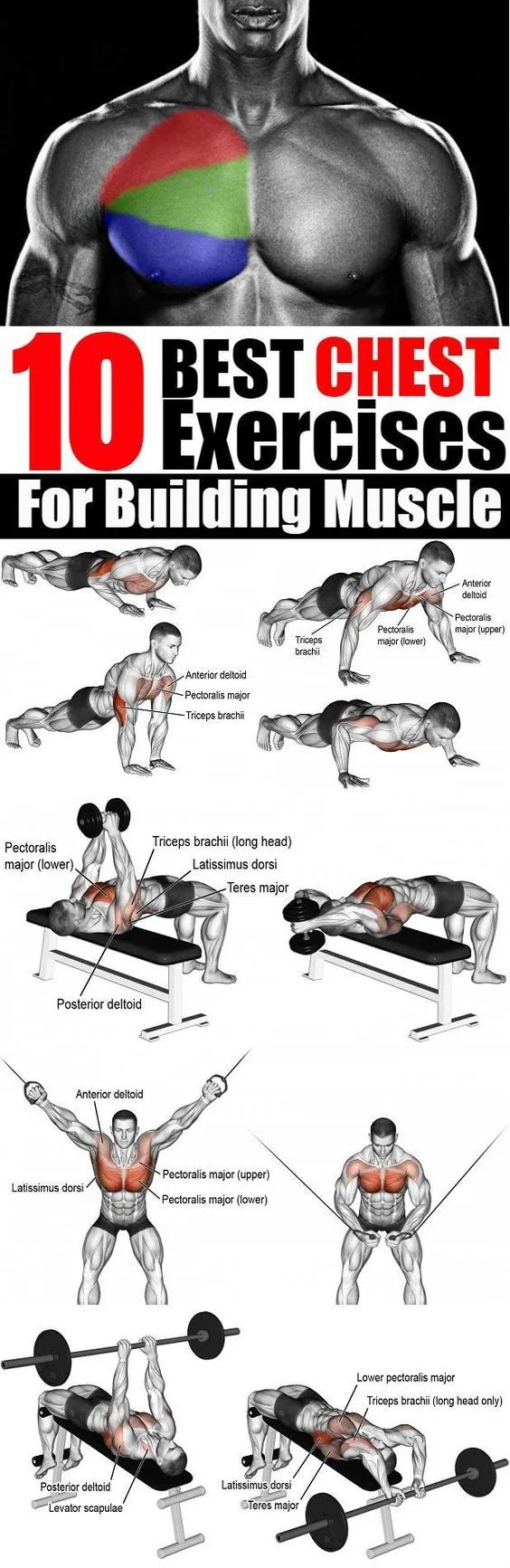
The bench press is a staple in any chest workout routine. It involves lying on a bench while pressing weights upward, targeting the pectorals, deltoids, and triceps. Variations such as incline, decline, and flat bench press target different areas of the chest. Regularly incorporating bench press variations can ensure balanced muscle development and prevent plateaus. Beginners should start with a manageable weight and perfect their form before progressing. Always have a spotter or use a safety rack when lifting heavier weights.
Push-Ups
Push-ups are a versatile bodyweight exercise that can be performed almost anywhere. They help strengthen the chest, shoulders, and triceps. Performing push-ups with correct form ensures maximum benefits, and varying hand placements can target different muscle groups. For example, wide-arm push-ups emphasize the chest, while diamond push-ups target the triceps. To track progression effectively, maintain a workout log or use a fitness app to monitor the increase in repetitions over time. Push-ups also enhance endurance and core stability, making them a holistic workout option.
Dumbbell Flyes
Dumbbell flyes are ideal for targeting the inner chest and increasing the range of motion, leading to a more defined chest. This exercise involves lying on a bench with a dumbbell in each hand, lifting and lowering them in a wide arc. Maintaining a slight bend in the elbows ensures the focus remains on the chest muscles rather than the joints. As with any exercise, it is crucial to start with lighter weights to prevent strain or injury. Flyes offer an effective stretch in the pectorals, aiding in muscle growth and flexibility.
Chest Dips
Chest dips are an effective workout for emphasizing the lower portion of the pectoral muscles. When performed correctly, they significantly engage the chest, shoulders, and triceps. To execute chest dips, you need parallel bars and a firm grip, lowering the body by bending the elbows while leaning slightly forward. Adjusting the body angle can vary the intensity and target muscle groups differently. Incorporating weighted dips can increase the workout’s difficulty, offering further growth potential. Ensure a controlled movement to avoid shoulder strain and maximize muscle engagement.
Cable Crossovers
Cable crossovers use cables to create constant tension throughout the movement, effectively targeting chest muscles. Perform this exercise by standing between two adjustable pulleys, bringing the handles together in front of your body in an arc. This flexibility allows the exercise to be fine-tuned for different ranges of motion, focusing on the entire chest muscle spectrum. Combining high-volume cable crossovers with low-repetition bench exercises creates a balanced routine for strength and endurance. Consistent form and control of the cables are key to preventing injuries while maximizing gains.
Customized Chest Workout Routines
Creating a specific routine based on one’s fitness level is vital for balanced muscle development and optimal progress. Below are tailored routines for beginner, intermediate, and advanced levels, incorporating the aforementioned exercises.
Beginner Routine
- 3 sets of 10 reps of flat bench press using light weights.
- 3 sets of maximum reps of standard push-ups.
- 2 sets of 12 reps of dumbbell flyes.
- 2 sets of 8 reps of starter chest dips (use assistance if needed).
- 3 sets of 15 cable crossovers with moderate resistance.
This beginner routine focuses on developing foundational strength and practicing form. It is essential to prioritize quality over quantity to build a strong base and prepare the body for more advanced routines.
Intermediate Routine
- 4 sets of 8 reps of inclined bench press.
- 3 sets of maximum reps of wide-arm push-ups.
- 3 sets of 10 reps of heavier dumbbell flyes.
- 3 sets of 10 reps of chest dips with light weights.
- 4 sets of 12 cable crossovers with increased resistance.
At the intermediate level, the focus shifts to combining strength and endurance. Variations in exercises challenge the muscles differently, focusing on incorporating compound movements for a comprehensive routine.
Advanced Routine
For advanced individuals, progress often demands a more intricate routine, integrating high-intensity exercises and progressive overload techniques to push beyond existing limits. These advanced routines focus on creating a stimulus for maximum growth and muscle hypertrophy.
| Exercise | Sets | Reps | Notes |
|---|---|---|---|
| Decline Bench Press | 5 | 8 | Heavier weights for maximal hypertrophy. |
| Plyometric Push-Ups | 4 | Maximum | Explosive movement focusing on power. |
| Heavy Dumbbell Flyes | 3 | 8 | Slow eccentric movement. |
| Weighted Chest Dips | 4 | 10 | Controlled downward motion. |
| Low Cable Crossovers | 3 | 15 | Focus on time under tension. |
This table illustrates a high-intensity routine intended for those with extensive training experience aiming for muscle definition and endurance. Emphasis is placed on lifting heavier with proper form and deliberate control throughout the movements.
Tips for Optimal Chest Workouts
To maximize results from chest workouts, it’s crucial to incorporate warm-up exercises like light cardio or dynamic stretches. Prioritizing proper form over heavier weights reduces the risk of injury and encourages better muscle engagement. Consider varying workout routines periodically to prevent muscle adaptation and continue seeing progress. Additionally, ensure sufficient rest between sessions to allow for optimal muscle recovery. A balanced diet with adequate protein intake also supports muscle growth and repair, complementing your fitness endeavors.
Shoulder discomfort is something I see often in people who press heavy. A dull muscle ache after training is normal, but sharp pain at the front of the shoulder during a press is a signal to stop and get it checked rather than push through.
Rose TateHealth Educator & Nutrition CoachConclusion
Incorporating chest workouts into your fitness routine is an excellent way to enhance upper body strength, posture, and muscle definition. Varying exercises and intensities caters to different fitness levels, providing a path to continued progress. Whether you’re just starting or looking to advance your workout regimen, focusing on these exercises can lead to noticeable gains in strength and endurance. Remember to maintain consistency, practice proper form, and listen to your body’s needs for the best results in your fitness journey.
FAQs
1. How often should I perform chest workouts?
It’s best to work out your chest 2-3 times a week, allowing at least one day of rest in between sessions for recovery. This gives muscles adequate time to repair and grow stronger between workouts.
2. Can chest exercises help with back pain?
Strengthening the chest can improve posture, which may alleviate some back pain issues; however, to ensure balanced development, it is important to work on back muscles as well. Consistent exercise and stretching are key.
3. Are push-ups effective for building chest muscles?
Yes, push-ups are highly effective and can be varied to increase intensity and boost chest muscle growth. They require no equipment, making them a versatile option suitable for different fitness levels.
4. What is the best beginner chest exercise?
The bench press is a great starter exercise due to its simplicity and effectiveness in targeting chest muscles, but beginners should perform it with proper guidance and focus on mastering form to prevent injury.
5. Can I build chest muscles without weights?
Yes, bodyweight exercises like push-ups and chest dips are effective for building chest muscles without external weights. These exercises also improve endurance and core stability.
This article is for general information only and is not a substitute for professional medical advice. Talk to your doctor before starting a new exercise program. See our medical disclaimer.