Workout Plan for Women to Lose Weight: Free 4-Week Beginner Plan
 Written by Patrick UtschinskiNASM Certified Personal Trainer
 Reviewed by Rose TateHealth Educator & Nutrition Coach
Summary
- Do 3 full-body strength workouts and 2-3 cardio sessions a week, plus everyday walking.
- Each strength exercise has a home and a gym version; add weight or reps when the sets get easy.
- More than 250 minutes of activity a week is linked with meaningful weight loss.
- A healthy pace is 1-2 pounds a week, so 4-8 pounds in 4 weeks is realistic.
On this page
- Weekly Workout Schedule for Weight Loss
- Strength Workout A (Full Body)
- Strength Workout B (Full Body)
- Cardio Plan for Weight Loss
- 4-Week Workout Plan for Beginners
- How Many Days a Week Should You Work Out to Lose Weight?
- Cardio or Weights for Weight Loss?
- Nutrition: The Other Half of the Plan
- How Much Weight Can You Lose in 4 Weeks?
- How to Track Your Progress
- Common Mistakes That Stall Weight Loss
- Conclusion
- FAQs
The best workout plan for women to lose weight combines 3 full-body strength workouts, 2-3 cardio sessions and plenty of everyday walking, together with a modest calorie deficit. Strength training keeps your muscle while you lose fat, cardio adds to the calories you burn, and the deficit is what actually moves the scale. Below you will find a free 4-week plan for beginners: a weekly workout schedule, two strength workouts in home and gym versions, a cardio plan and a week-by-week progression.
Weekly Workout Schedule for Weight Loss
| Day | Workout | Time |
|---|---|---|
| Monday | Strength Workout A | 40 min |
| Tuesday | Brisk walk, bike or elliptical | 30-45 min |
| Wednesday | Strength Workout B | 40 min |
| Thursday | Intervals + core (from week 3) | 20 + 10 min |
| Friday | Strength Workout A | 40 min |
| Saturday | Long walk, hike, swim or bike ride | 45-60 min |
| Sunday | Rest or gentle yoga | 0-20 min |
Alternate the strength workouts: A-B-A one week, B-A-B the next. This schedule gives you 3 strength days and about 150-200 minutes of moderate cardio a week, which meets the official guidelines of 150-300 minutes of moderate activity and at least 2 days of muscle strengthening[1].
For weight loss, more movement helps. Research reviewed by the American College of Sports Medicine shows that 150-250 minutes a week of moderate activity gives only modest weight loss, while more than 250 minutes a week is linked with clinically meaningful weight loss[2]. Short walks after meals and on rest days are the easiest way to close that gap.
Strength Workout A (Full Body)
Warm up for 5 minutes: march or walk, then do 10 bodyweight squats, 10 arm circles and 10 hip hinges. Rest 60-90 seconds between sets.
| Exercise | Home version | Gym version | Sets x reps |
|---|---|---|---|
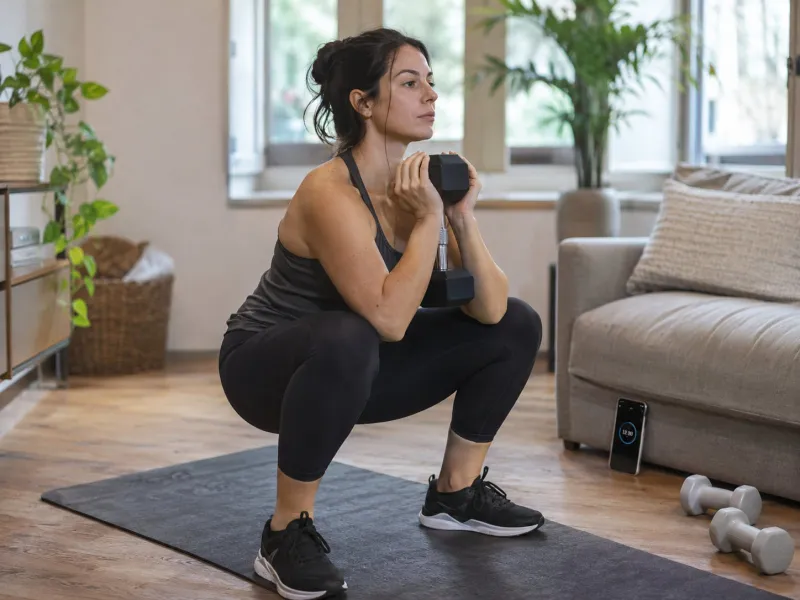
| Squat | Bodyweight squat or squat holding a loaded backpack | Dumbbell goblet squat | 3 x 10-12 |
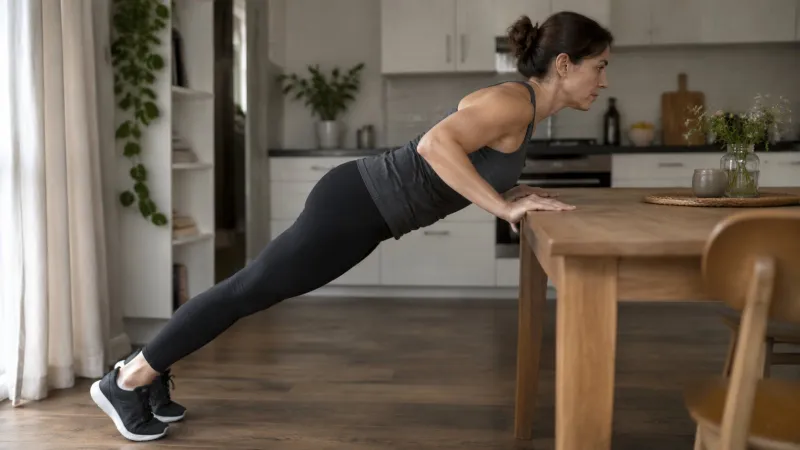
| Push | Incline push-up with hands on a sturdy table or bench | Dumbbell bench press | 3 x 8-12 |
| Hip hinge | Single-leg glute bridge | Dumbbell Romanian deadlift | 3 x 10-12 |
| Pull | Bent-over row with a resistance band or backpack | Lat pulldown | 3 x 10-12 |
| Core | Plank | Plank | 3 x 20-40 s |
Women often ask me what matters more, cardio or weights. For fat loss and a toned look you want both: two or three strength sessions a week shape the body, and cardio supports the calorie deficit.
Patrick UtschinskiNASM Certified Personal TrainerStrength Workout B (Full Body)
| Exercise | Home version | Gym version | Sets x reps |
|---|---|---|---|
| Lunge | Reverse lunge | Dumbbell reverse lunge or leg press | 3 x 8-10 per leg |
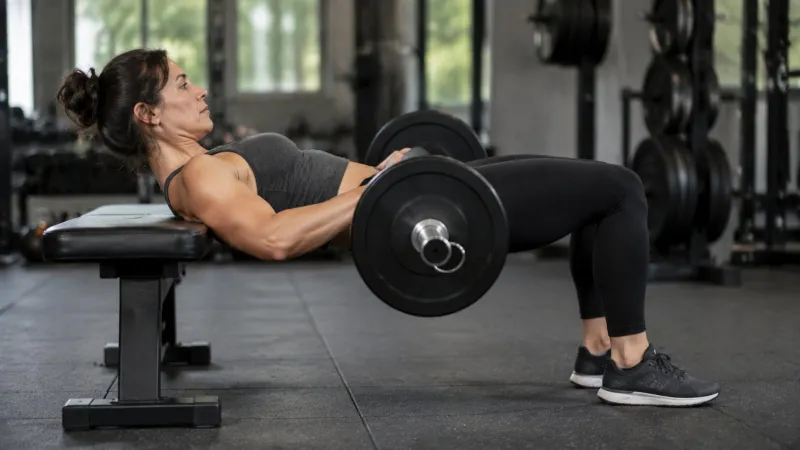
| Glutes | Glute bridge with a 2-second pause at the top | Barbell or machine hip thrust | 3 x 12 |
| Shoulders | Overhead press with a resistance band or water bottles | Seated dumbbell shoulder press | 3 x 10 |
| Pull | Seated row with a resistance band | Seated cable row | 3 x 10-12 |
| Step-up | Step-up onto a stair | Step-up onto a box with dumbbells | 3 x 10 per leg |
| Core | Dead bug | Dead bug | 3 x 8 per side |
How to Choose the Right Weight
Pick a weight or variation where the last 2 reps of each set feel hard but your form stays clean. When you can do the top of the rep range in all 3 sets, make it a little harder next time: add weight, slow down the lowering phase or choose a harder variation. This steady progression is what changes your body, not random new workouts every week.
Worried about getting bulky? Women build muscle slowly, and at a calorie deficit even more slowly. Read more in how to gain muscle as a woman without getting bulky and weight training for women: myths and facts.
Cardio Plan for Weight Loss

- Steady cardio (Tuesday and Saturday). Brisk walking, cycling, swimming or the elliptical at a pace where you can talk but not sing. Start with 30 minutes and build up to 45-60.
- Intervals (Thursday, from week 3). Warm up for 5 minutes, then do 6-8 rounds of 30 seconds fast and 90 seconds easy, and cool down for 5 minutes. Uphill walking, a bike or a rowing machine are gentler on the joints than sprinting.
- Everyday movement. Short walks after meals, taking the stairs and walking during phone calls all add to the calories you burn each week.
Not sure whether to walk or run? Compare the calories in our guide to walking vs running for weight loss.
4-Week Workout Plan for Beginners
| Week | Strength | Cardio | Focus |
|---|---|---|---|
| Week 1 | 2 workouts (A and B), 2 sets per exercise | 2 brisk walks of 20-30 min | Learn the exercises |
| Week 2 | 3 workouts, 2-3 sets | 2-3 walks of 30 min | Build the habit |
| Week 3 | 3 workouts, 3 sets, add reps or weight | 2 walks of 30-45 min + 1 interval session | Progress |
| Week 4 | 3 workouts, 3 sets, slightly heavier | Full schedule: 2 steady sessions, 1 interval session, 1 long weekend activity | Full plan |
After week 4, repeat the full schedule and keep adding weight or reps. Every 6-8 weeks you can swap a few exercises for similar ones, for example goblet squats for split squats, to keep progressing.
How Many Days a Week Should You Work Out to Lose Weight?
Most women get the best results from 4-6 active days a week: 3 strength workouts, 2-3 cardio sessions and at least 1 full rest day. Beginners can start with 3-4 days and add more once the routine feels manageable. More is not always better: if you feel constantly tired, sleep badly or your performance drops for more than a week, take an extra rest day.
Cardio or Weights for Weight Loss?
You need both. A cardio session burns more calories in the moment, which helps the deficit. Strength training on its own does not speed up weight loss on the scale much, but it helps you keep lean mass and lose more of your weight as fat[2]. In studies, ten weeks of resistance training increased lean weight by about 1.4 kg, reduced fat by about 1.8 kg and raised resting metabolic rate by 7%[4].
If you do both in one session, lift first, while you are fresh, and do cardio afterwards.
Nutrition: The Other Half of the Plan
Workouts support weight loss, but the calorie deficit drives it. Exercise works best with a moderate deficit: in studies, 150-250 minutes of activity a week improved weight loss with moderate diet restriction, but not with severe restriction[2]. Simple habits that help:
- Include a source of protein at every meal: eggs, Greek yogurt, fish, chicken, beans or tofu.
- Fill half your plate with vegetables and fruit.
- Swap sugary drinks for water, tea or coffee without syrup.
- Aim for 7 or more hours of sleep, so you recover from workouts and have the energy to train.
How Much Weight Can You Lose in 4 Weeks?
A healthy pace is about 1-2 pounds a week, and people who lose weight at a gradual, steady pace are more likely to keep it off[3]. That means about 4-8 pounds in 4 weeks is realistic. The first week is often faster because you lose some water, and when you start strength training your waist measurement may change faster than the number on the scale.
How to Track Your Progress
- Weigh yourself 2-3 mornings a week and look at the weekly average, not single days.
- Measure your waist and hips every 2 weeks at the same spot.
- Take photos once a month in the same light and clothes.
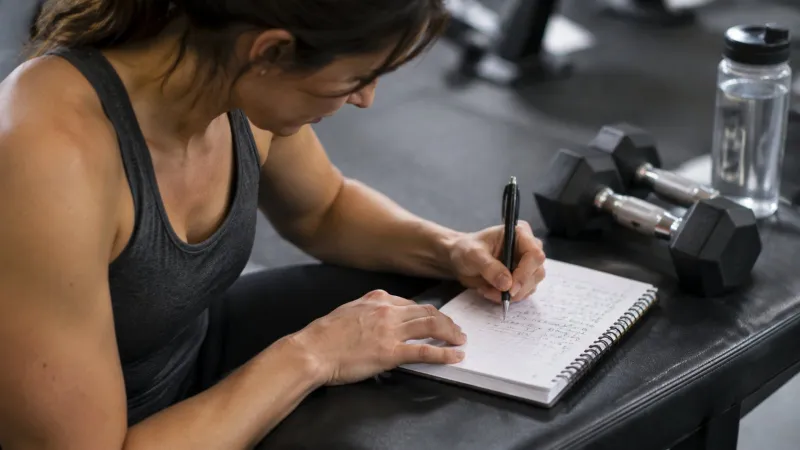
- Write down your weights and reps. If they go up while your weight goes down, you are losing fat, not muscle.
Common Mistakes That Stall Weight Loss
- Only doing cardio. You lose weight, but you miss the benefits of strength training for keeping lean mass.
- Eating too little. A crash diet leaves no energy for training and is hard to maintain.
- Changing the plan every week. Results come from repeating the same exercises and getting stronger at them.
- Skipping the warm-up. Five minutes is enough to get your joints and muscles ready.
- Compensating with food. A hard workout does not cancel out a large dessert.
Short on time or traveling? Use our home workouts without a gym or the 20-minute hotel room workout, add the best ab workouts on interval days and finish the week with yoga for flexibility.
Sustainable weight loss is gradual. Very low calorie diets combined with intense training can leave you exhausted and more prone to injury, so aim for a modest deficit with enough protein and sleep.
Rose TateHealth Educator & Nutrition CoachConclusion
A good workout plan for women to lose weight is simple: 3 full-body strength workouts, 2-3 cardio sessions, more everyday walking and a moderate calorie deficit. Start with the 4-week beginner plan, add a little weight or a few reps each week and track your waist, photos and strength along with the scale. Steady progress of 1-2 pounds a week adds up and is much easier to keep.
FAQs
Can I lose weight in 4 weeks?
Yes. With regular workouts and a moderate calorie deficit, losing about 4-8 pounds in 4 weeks is realistic for most women. A gradual pace is easier to keep off than fast loss.
How many days a week should a woman work out to lose weight?
4-6 days: 3 strength workouts, 2-3 cardio sessions and at least 1 rest day. Beginners can start with 3 days and build up.
Should I do cardio or weights first?
Weights first if you do both in one session, so you can lift with good form while you are fresh. Or do them on separate days, as in the schedule above.
Will strength training make me bulky?
No. Women build muscle slowly, especially while eating in a calorie deficit. Strength training makes you look firmer and more toned, not bulky.
What is the 30/30/30 rule for weight loss?
It is a social media trend: eat 30 grams of protein within 30 minutes of waking up, then do 30 minutes of low-intensity cardio. There is no magic in the exact numbers, but a protein-rich breakfast and a daily walk are sensible habits that fit this plan well.
Is walking enough to lose weight?
Walking can be enough with a calorie deficit, especially if you walk briskly for 45-60 minutes most days. Adding strength training helps you keep muscle and look more toned.
Sources
- U.S. Office of Disease Prevention and Health Promotion: Top 10 Things to Know About the Physical Activity Guidelines for Americans
- Donnelly JE et al. American College of Sports Medicine position stand: appropriate physical activity intervention strategies for weight loss and prevention of weight regain for adults. Med Sci Sports Exerc. 2009
- U.S. Centers for Disease Control and Prevention: Steps for Losing Weight
- Westcott WL. Resistance training is medicine: effects of strength training on health. Curr Sports Med Rep. 2012
This article is for general information only and is not a substitute for professional medical advice. Talk to your doctor before starting a new exercise program. See our medical disclaimer.