Yoga for Flexibility and Strength: 12 Poses and a 20-Minute Routine
 Written by Patrick UtschinskiNASM Certified Personal Trainer
 Reviewed by Rose TateHealth Educator & Nutrition Coach
Summary
- Six poses stretch the hamstrings, hips and spine, and six build strength in the legs, core and arms.
- The 20-minute routine combines both; the 10-minute version is for quick morning stretching.
- Stretch each major muscle group at least 2 days a week, about 60 seconds per stretch.
- In studies, beginners improved flexibility and strength after 8-10 weeks of regular yoga.
On this page
- 12 Yoga Poses for Flexibility and Strength at a Glance
- Yoga Poses for Flexibility
- Yoga Poses for Strength
- 20-Minute Yoga Routine for Flexibility and Strength
- How Often to Do Yoga for Flexibility
- How Long Does It Take to Get More Flexible?
- Can Yoga Build Strength?
- Yoga for Stiff Beginners: How to Modify
- Common Mistakes That Slow Your Progress
- Conclusion
- FAQs
The best yoga for flexibility combines long, relaxed holds for tight areas (hamstrings, hips and spine) with standing and core poses that build strength at the same time. Below are 12 poses, six for flexibility and six for strength, each with an easier option for stiff beginners, plus a 20-minute routine you can do at home and a 10-minute morning version. Practice at least 2-3 times a week and most beginners see measurable gains within 8-10 weeks.
12 Yoga Poses for Flexibility and Strength at a Glance
| Pose | Main goal | Stretches or strengthens | Hold | Easier option |
|---|---|---|---|---|
| Standing Forward Bend | Flexibility | Hamstrings, calves, lower back | 30-60 s | Bend knees, hands on blocks |
| Downward-Facing Dog | Both | Hamstrings, calves, shoulders; arms | 30-60 s | Knees bent, heels lifted |
| Low Lunge | Flexibility | Hip flexors, front of thighs | 30-60 s per side | Hands on blocks, padding under knee |
| Pigeon Pose | Flexibility | Outer hips, glutes | 1-2 min per side | Figure-4 stretch on your back |
| Reclined Hand-to-Big-Toe | Flexibility | Hamstrings | 30-60 s per side | Strap around the foot, other knee bent |
| Cobra Pose | Both | Chest, abs; back muscles | 15-20 s, 3 times | Low Cobra, elbows bent |
| Plank | Strength | Core, shoulders, arms | 20-45 s | Knees down |
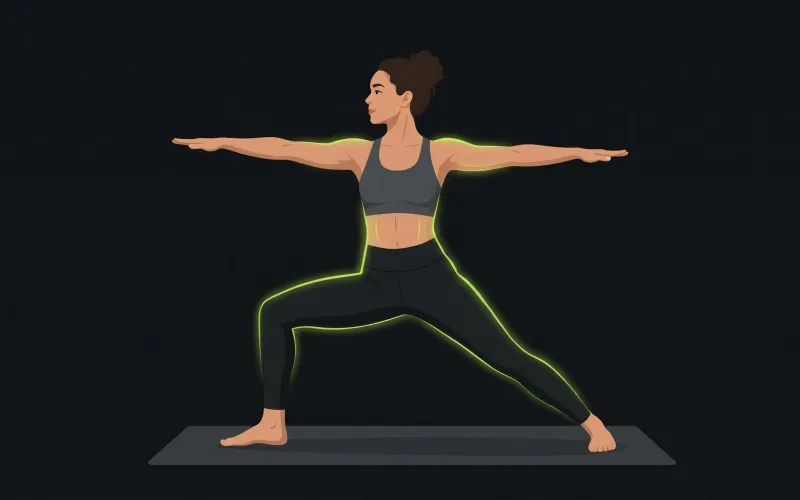
| Warrior II | Strength | Thighs, glutes; inner thighs | 30-45 s per side | Shorter stance, less knee bend |
| Chair Pose | Strength | Thighs, glutes, back | 20-30 s, 3 times | Hands on thighs, shallow bend |
| Bridge Pose | Both | Glutes, hamstrings; front of hips | 30 s, 3 times | Lower lift, block under hips |
| Tree Pose | Strength and balance | Ankles, legs, core | 30-45 s per side | Toes on the floor, hand on a wall |
| Boat Pose | Strength | Abs, hip flexors | 15-20 s, 3 times | Knees bent, hands behind thighs |
Yoga Poses for Flexibility
Hold each stretch where you feel a clear but comfortable pull, breathe slowly and let the muscle relax a little more on every exhale. Do not bounce. Aim for about 60 seconds of total time in each stretch, split into shorter holds if needed[2].
Standing Forward Bend (Uttanasana)
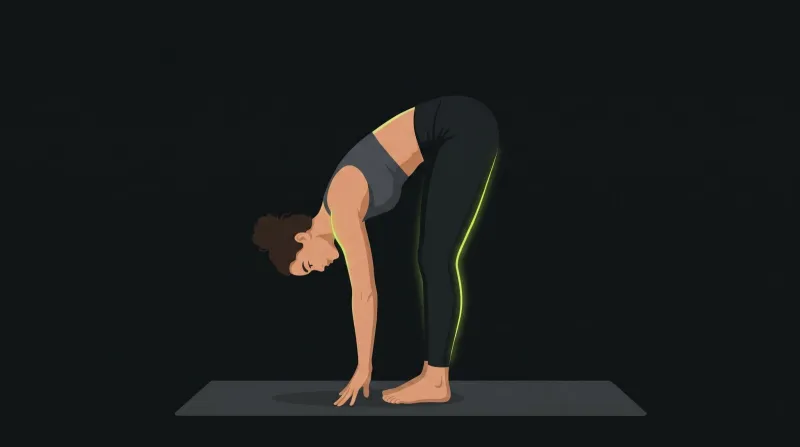
Stand with your feet hip-width apart. Exhale and hinge forward from the hips, keeping your back long, and let your hands hang toward the floor or rest on blocks. Bend your knees as much as you need: the goal is to stretch the back of the legs, not to touch the floor with a rounded back. Let your head and neck relax. To come up, bend your knees and roll up slowly.
Downward-Facing Dog (Adho Mukha Svanasana)
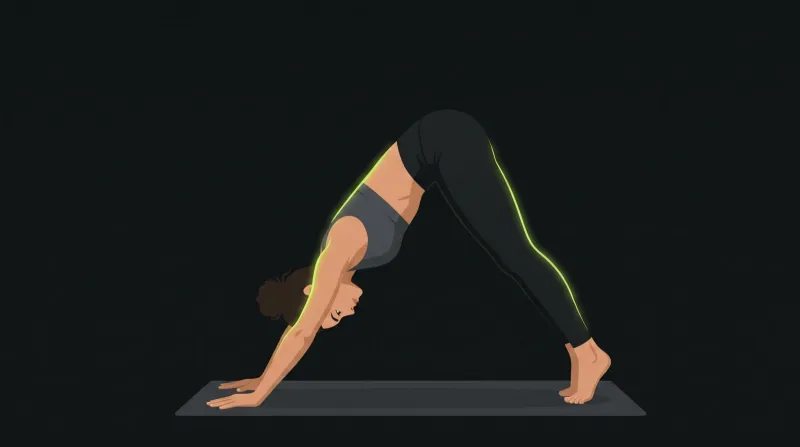
Start on your hands and knees with your hands slightly in front of your shoulders. Tuck your toes and lift your hips up and back into an upside-down V. Press the floor away with your hands so your shoulders move away from your ears. Keep your knees bent at first and lengthen your spine, then slowly work your heels toward the floor. They do not need to touch it. Pedal your feet, bending one knee and then the other, to ease tight calves.
Low Lunge (Anjaneyasana)
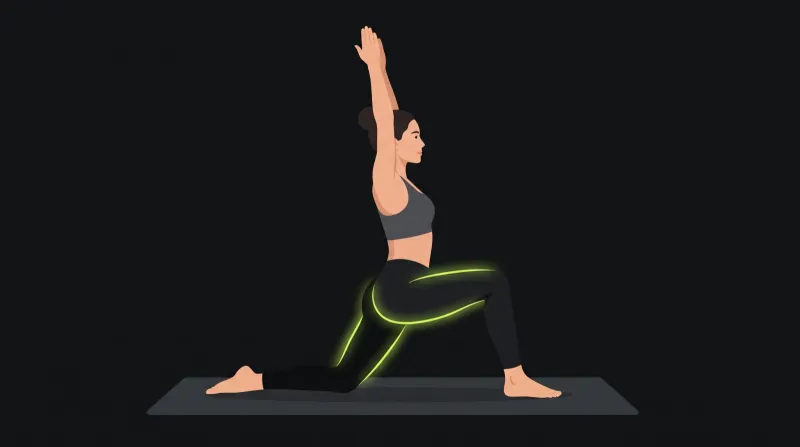
Step your right foot forward between your hands and lower your left knee to the mat, with a folded towel under it if the floor is hard. Keep your front knee over the ankle. Gently shift your hips forward until you feel a stretch in the front of the left hip and thigh, and keep your lower belly lightly engaged so your lower back does not sag. Raise your arms if you feel steady. This pose is a must for anyone who sits for most of the day, because sitting keeps the hip flexors in a shortened position.
Pigeon Pose (Eka Pada Rajakapotasana)
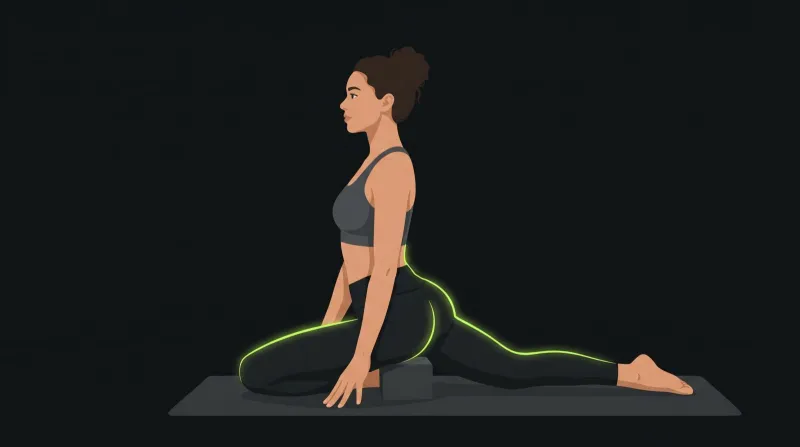
From Downward-Facing Dog, bring your right knee forward behind your right wrist and place your shin on the mat at an angle. Slide your left leg straight back with the top of the foot on the floor. Keep your hips level: if the right hip floats off the floor, put a block or cushion under it. Stay upright on your hands or fold forward over your front leg. If your knees complain, do the Figure-4 stretch instead: lie on your back, cross your right ankle over your left knee and pull the left thigh toward your chest.
Reclined Hand-to-Big-Toe Pose (Supta Padangusthasana)
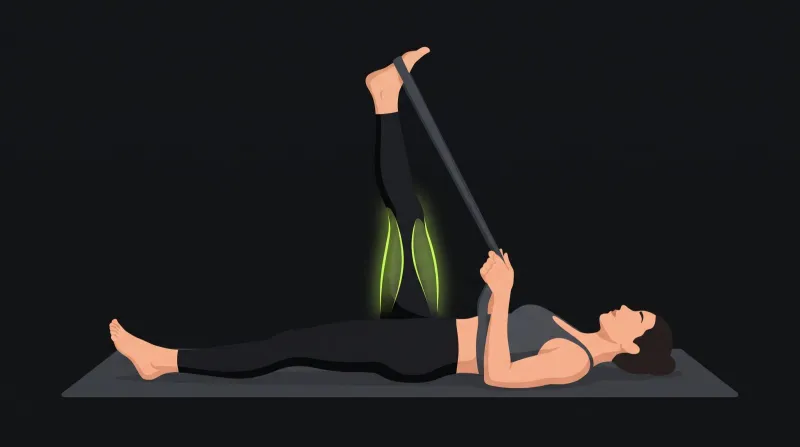
Lie on your back and loop a strap, belt or towel around the ball of your right foot. Straighten the right leg toward the ceiling while your left leg stays long on the floor, or bent with the foot down if your lower back is tight. Keep both hips on the mat and walk your hands up the strap until you feel the stretch in the back of the thigh. Because your back is supported, this is the safest hamstring stretch for beginners.
Cobra Pose (Bhujangasana)
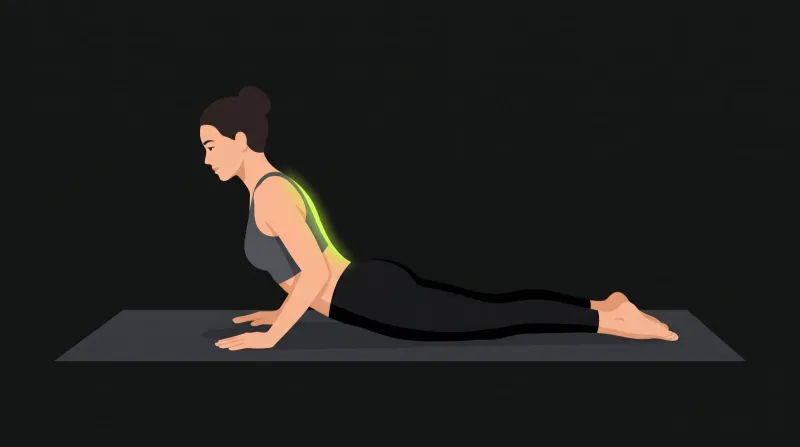
Lie face down with your hands under your shoulders and your elbows close to your ribs. Press the tops of your feet into the mat, then lift your chest using your back muscles, with only a little help from your hands. Keep your elbows slightly bent, shoulders down and neck long. Start with Low Cobra, lifting only a few inches, and hold for a few breaths. Cobra opens the chest and front of the body and strengthens the muscles along the spine.
I use yoga with my clients as the other half of strength training. Ten minutes of Downward Dog, Pigeon and Forward Bend after a session makes a real difference to how their hips and hamstrings feel the next day.
Patrick UtschinskiNASM Certified Personal TrainerYoga Poses for Strength
These poses build strength by holding your own body weight in a fixed position. Keep breathing during every hold. If your form breaks down, come out of the pose, rest and repeat rather than pushing through.
Plank Pose (Phalakasana)
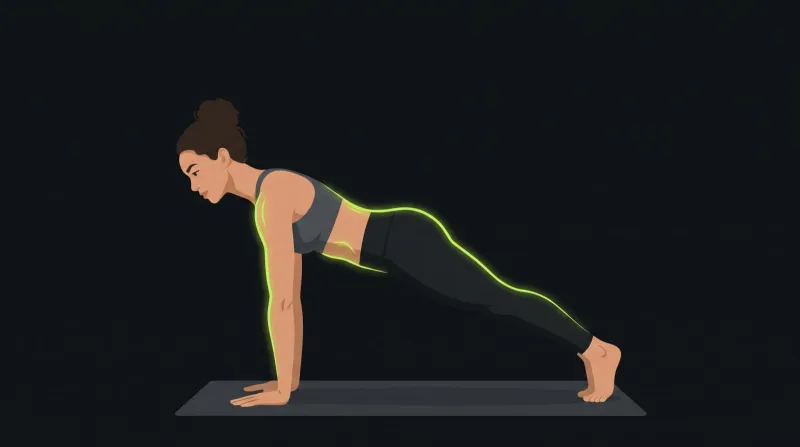
Start at the top of a push-up with your shoulders over your wrists. Make one straight line from your head to your heels by squeezing your glutes and pulling your belly button gently in. Do not let your hips sag or pike up. Hold for 20-45 seconds. Put your knees down to make it easier, or try Side Plank to work the obliques. For more core work, see our ab workouts for women and men.
Warrior II (Virabhadrasana II)
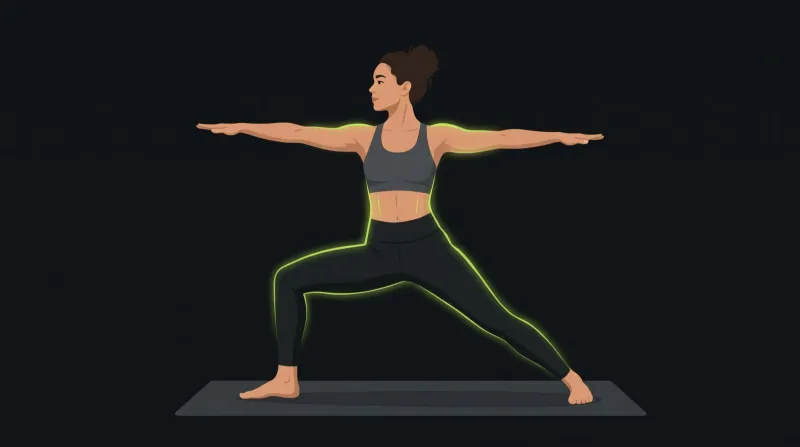
Step your feet wide apart. Turn your right foot out 90 degrees and the left foot slightly in. Bend your right knee until it is directly over the ankle, keeping it in line with your second toe. Stretch your arms out at shoulder height and look over your front hand. Press firmly into the outer edge of the back foot. Warrior II strengthens the thighs and glutes and gently stretches the inner thighs and hips.
Chair Pose (Utkatasana)
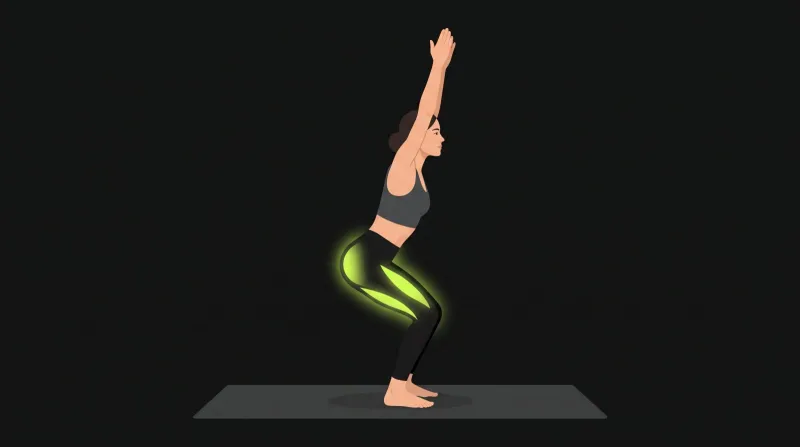
Stand with your feet hip-width apart. Bend your knees and sit your hips back as if you were lowering onto a chair, with your weight in your heels and your knees pointing the same way as your toes. Raise your arms alongside your ears and keep your chest lifted. Hold for 20-30 seconds and repeat 3 times. This is the yoga version of a squat hold and one of the best poses for leg strength.
Bridge Pose (Setu Bandha Sarvangasana)
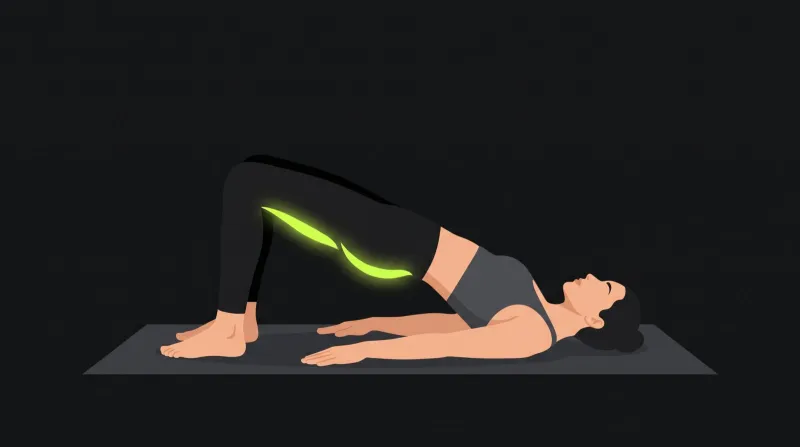
Lie on your back with your knees bent and your feet flat, hip-width apart and close to your hips. Press through your feet and lift your hips until your body forms a straight line from shoulders to knees. Keep your knees pointing forward and do not turn your head while you are lifted. Bridge strengthens the glutes and hamstrings and at the same time stretches the front of the hips.
Tree Pose (Vrksasana)
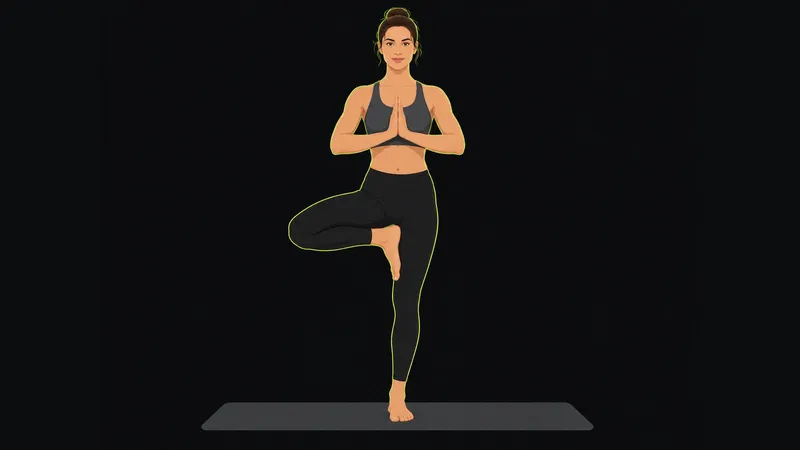
Stand on your left foot and place the sole of your right foot on your inner left calf or inner thigh, never on the side of the knee. Press foot and leg into each other, bring your hands together at your chest and fix your eyes on one point. For an easier version, keep your right toes on the floor like a kickstand and stand near a wall. Tree Pose trains balance, ankle stability and the deep core muscles.
Boat Pose (Navasana)
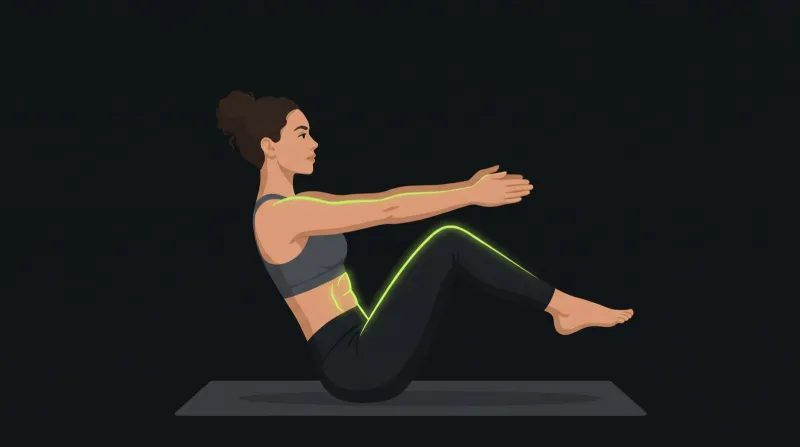
Sit with your knees bent and feet flat. Lean back slightly with a long spine, lift your feet until your shins are parallel to the floor and reach your arms forward. Balance on your sit bones without rounding your lower back. Hold for 15-20 seconds and repeat 3 times. Hold the backs of your thighs if you need support, or straighten your legs to make it harder.
20-Minute Yoga Routine for Flexibility and Strength
This routine starts with a gentle warm-up, builds strength in the middle and saves the deepest stretches for the end, when your body is warm. Do it 3 times a week, or on rest days between other workouts.
| # | Pose | Time | Focus |
|---|---|---|---|
| 1 | Cat-Cow (on hands and knees, round then arch your back) | 1 min | Warm-up for the spine |
| 2 | Downward-Facing Dog, pedaling the feet | 1 min | Calves, hamstrings, shoulders |
| 3 | Low Lunge | 1 min per side | Hip flexors |
| 4 | Warrior II | 45 s per side | Leg strength |
| 5 | Chair Pose | 3 x 20 s | Thighs and glutes |
| 6 | Tree Pose | 45 s per side | Balance |
| 7 | Plank | 3 x 20-30 s | Core and arms |
| 8 | Standing Forward Bend | 1 min | Hamstrings, lower back |
| 9 | Pigeon Pose | 1-2 min per side | Outer hips |
| 10 | Bridge Pose | 3 x 30 s | Glutes, front of hips |
| 11 | Boat Pose | 3 x 15 s | Abs |
| 12 | Cobra Pose | 3 x 15 s | Chest and back |
| 13 | Reclined Hand-to-Big-Toe | 1 min per side | Hamstrings |
| 14 | Child's Pose (knees wide, hips to heels, arms forward) | 1-2 min | Relaxation |
10-Minute Morning Stretch
Short on time? Do only the flexibility part: Cat-Cow (1 min), Downward-Facing Dog (1 min), Low Lunge (1 min per side), Standing Forward Bend (1 min), Pigeon Pose (1 min per side) and Reclined Hand-to-Big-Toe (1 min per side). It is a good way to loosen up after a night's sleep or a long day at a desk.
How Often to Do Yoga for Flexibility
The American College of Sports Medicine recommends flexibility exercises for each major muscle group at least 2 days a week, with about 60 seconds in total for each stretch[2]. That is the minimum. For faster progress, practice 3-5 times a week. Several short sessions work better than one long class on the weekend, because range of motion improves through regular repetition.
Stretching is most comfortable when your muscles are warm, so the best times are after a walk, after a workout or after a few minutes of Cat-Cow and Downward-Facing Dog.
How Long Does It Take to Get More Flexible?
Most people feel looser after the first few sessions, but lasting changes take weeks. In a study of untrained beginners who did yoga twice a week, trunk flexion improved by 14% and ankle flexibility by 13% after 8 weeks[4]. College athletes who added yoga for 10 weeks improved in the sit-and-reach and shoulder flexibility tests, while their teammates who did not do yoga showed no change[3].
To see your own progress, test yourself every 2 weeks: in a Standing Forward Bend with straight knees, note where your fingertips reach (knees, shins, ankles or floor). Write it down. Progress is rarely linear, and it is normal to be stiffer in the morning than in the evening.
Can Yoga Build Strength?
Yes. Many poses ask you to hold your body weight in a squat, lunge or plank position, which works your muscles much like a bodyweight workout. In the same 8-week study, knee extension strength rose by 28% and the endurance of the hamstrings by 57%[4]. The study was small, but it shows that yoga is far more than stretching.
Yoga will not replace heavy strength training if your goal is to build a lot of muscle, because you cannot keep adding load the way you can with weights. The best combination is 2-3 strength sessions a week plus 2-3 yoga sessions. Read more in weight training for women: myths and facts and how to gain muscle as a woman.
Yoga for Stiff Beginners: How to Modify
You do not need to be flexible to start yoga. That is what the practice is for. Use these simple tricks:
- Bend your knees in forward bends and Downward-Facing Dog. A long spine matters more than straight legs.
- Bring the floor closer with yoga blocks, thick books or a chair seat under your hands.
- Use a strap or towel to reach your feet in seated and reclined stretches.
- Pad your knees with a folded towel in Low Lunge and on hands and knees.
- Use a wall for balance in Tree Pose and Warrior II.
No mat at home? A carpet works for most poses. You can combine this routine with our home workouts without a gym, and a short flow fits easily into a hotel room, as described in our hotel room workout guide.
Common Mistakes That Slow Your Progress
Yoga is generally considered safe for healthy people when it is done properly, ideally with guidance from a qualified instructor. People with some injuries or health conditions may need to modify or skip certain poses[1]. Most problems at home come from a handful of habits:
- Bouncing in a stretch. Hold still instead and let the muscle relax.
- Forcing the pose. A strong pull is fine, sharp or burning pain is not.
- Holding your breath. Slow breathing helps the muscles let go.
- Stretching cold muscles. Warm up for a few minutes first.
- Locking the knees and elbows. Keep a soft bend to protect the joints.
- Practicing only once a week. Frequency brings results, not the length of a single session.
Yoga is generally safe, but not every pose suits everyone. People with high blood pressure, glaucoma or a recent injury should avoid inversions until they have spoken with their doctor.
Rose TateHealth Educator & Nutrition CoachConclusion
Yoga for flexibility works best when it is regular and gentle: 20 minutes 3 times a week with relaxed holds in the tight areas, plus a few standing and core poses for strength. Start with the easier options, track your forward bend every 2 weeks and add time to the holds as your body opens up. Pair yoga with strength training and some brisk walking, as in our walking vs running guide, and you cover flexibility, strength and heart health in one simple week.
FAQs
How long does it take to get flexible with yoga?
Most people feel looser after a few sessions, and measurable gains usually take 8-10 weeks of practice 2-3 times a week. Bigger goals, like the splits, can take many months.
Is 20 minutes of yoga a day enough?
For flexibility, yes: 20 minutes a day is more than the recommended minimum of stretching each major muscle group 2 days a week. For heart health, add brisk walking or other cardio, because gentle yoga is light exercise.
Is yoga just stretching?
No. Poses like Chair, Plank, Warrior II and Boat build strength by holding your body weight, and balance poses like Tree train stability. Studies of beginners show gains in both strength and flexibility.
What are the best yoga poses for beginners with no flexibility?
Start with Cat-Cow, Downward-Facing Dog with bent knees, Low Lunge, Reclined Hand-to-Big-Toe with a strap, Bridge and Child's Pose. They are easy to modify and do not require flexibility to begin.
Can yoga replace strength training?
For general fitness and beginners, yoga builds useful strength. To build significant muscle or bone strength, add strength training with weights 2-3 times a week.
Should I do yoga in the morning or in the evening?
Both work. Many people feel stiffer in the morning and looser in the evening, while a short morning flow is a nice way to wake up. The best time is the one you can stick to.
Sources
- National Center for Complementary and Integrative Health: Yoga: Effectiveness and Safety
- Garber CE et al. American College of Sports Medicine position stand: quantity and quality of exercise for developing and maintaining fitness. Med Sci Sports Exerc. 2011
- Polsgrove MJ et al. Impact of 10-weeks of yoga practice on flexibility and balance of college athletes. Int J Yoga. 2016
- Tran MD et al. Effects of hatha yoga practice on the health-related aspects of physical fitness. Prev Cardiol. 2001
This article is for general information only and is not a substitute for professional medical advice. Talk to your doctor before starting a new exercise program. See our medical disclaimer.