Outdoor Workout: 20-Minute Park Routine and the Best Outdoor Activities for Fitness
 Written by Patrick UtschinskiNASM Certified Personal Trainer
 Reviewed by Rose TateHealth Educator & Nutrition Coach
Summary
- A park bench, stairs or a playground bar is enough for a full-body outdoor workout without equipment.
- Do the 20-minute park circuit 2-3 times a week and add an activity you enjoy to reach 150 minutes a week.
- Exercising in nature is linked to a better mood and fewer symptoms of anxiety and depression than the same workout indoors.
- Train early or late in hot weather and know the signs of heat exhaustion and heat stroke.
On this page
An outdoor workout can be as simple as a brisk walk plus bodyweight exercises on a park bench, a set of stairs or a playground bar. Try the 20-minute park workout below 2-3 times a week and add one outdoor activity you enjoy, such as hiking, cycling or swimming, to reach the recommended 150 minutes of activity a week [1]. You need no gym membership and no equipment, and exercising in nature is linked to a better mood than the same workout indoors [2].
Below you will find the benefits of exercising outside, a full park workout, a stair workout and a playground workout, the best outdoor activities for fitness with a calories calculator, a weekly plan and tips for training in heat and cold.
Benefits of Exercising Outside
- Better mood. A 2026 analysis of 51 studies found that exercise in green spaces improved well-being and positive feelings and reduced negative feelings more than the same exercise indoors or on city streets [2].
- Fewer symptoms of depression and anxiety. Another 2026 review of 15 randomized trials found that exercising in nature improved mental health symptoms such as depression and anxiety significantly more than indoor exercise [3].
- Time in nature adds up. In a survey of nearly 20,000 people, those who spent at least 120 minutes a week in nature were more likely to report good health and well-being. It did not matter whether those minutes came in one long visit or several short ones [4].
- It is free. Parks, trails, stairs and benches are open to everyone, so cost is never the reason to skip a workout.
20-Minute Outdoor Workout You Can Do in Any Park

This full-body park workout needs only a sturdy bench and a bit of open space. Warm up first, then do the circuit 3 times with about 60 seconds of rest between rounds.
| Exercise | How to do it | Reps or time |
|---|---|---|
| Warm-up | Brisk walk or easy jog, then arm circles and leg swings | 5 minutes |
| 1. Bench step-ups | Place your whole foot on the bench, drive up until you stand tall, step down with control | 10 per leg |
| 2. Incline push-ups | Hands on the edge of the bench, body in a straight line from head to heels | 8-12 |
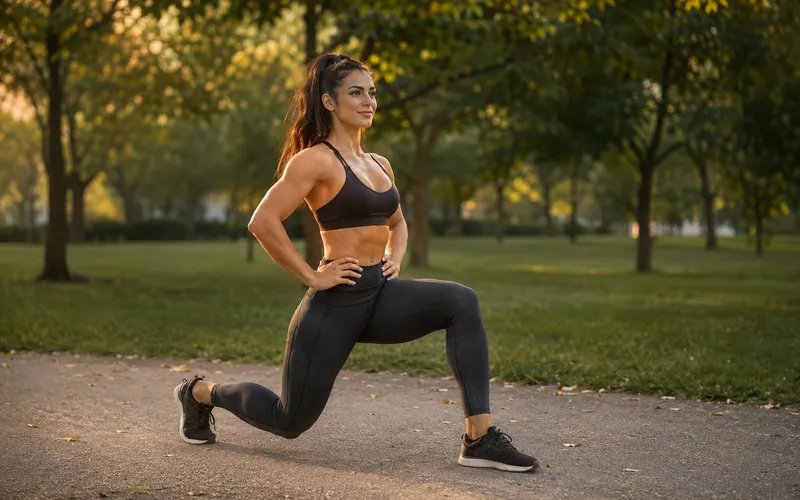
| 3. Walking lunges | Take long steps and lower the back knee toward the ground, torso upright | 10 per leg |
| 4. Squat to bench | Sit back until you lightly touch the bench, then stand up without using your hands | 12-15 |
| 5. Incline plank | Forearms or hands on the bench, squeeze glutes and abs | 30-45 seconds |
| 6. Sprints or fast walks | Sprint or walk fast for 20-30 meters, walk back to recover | 3 times |
| Cool-down | Easy walk and light stretches for calves, thighs and hips | 3-5 minutes |
Make it easier: do 2 rounds, use a higher surface for push-ups and replace sprints with fast walking. Make it harder: do 4 rounds, move from step-ups to jumping step-ups and lower your push-ups to the ground. Always check that the bench is stable and dry before you put your weight on it.
The best outdoor workout is the one you will actually repeat. Start with a route you enjoy, like a park loop or an easy trail, and build from there instead of planning a big hike you only do once.
Patrick UtschinskiNASM Certified Personal TrainerBest Outdoor Exercises: Use What the Park Gives You
Almost every park or neighborhood has free training tools. Here is how to use them.
Park Bench Workout
- Legs: step-ups, split squats with the back foot on the bench, squat to bench.
- Upper body: incline push-ups, decline push-ups with feet on the bench, bench dips if your shoulders feel comfortable.
- Core: incline plank, mountain climbers with hands on the bench, seated knee tucks on the edge.
Stair Workout

Stairs are one of the toughest outdoor workouts you can do. Climbing stairs at a general pace is about as intense as leisure cycling at 10-12 mph, and running up stairs is more than twice as demanding [5]. Find a stadium, a park staircase or a long public stairway and try this:
| Round | What to do | Sets |
|---|---|---|
| Warm-up | Walk up and down slowly | 3 minutes |
| 1 | Walk up every step, walk down carefully | 3 |
| 2 | Walk up two steps at a time, walk down | 3 |
| 3 | Climb fast or run up, walk down to recover | 3-5 |
| 4 | On the bottom step: 15 calf raises and 10 incline push-ups | 2 |
Hold the railing when you need it and always walk down. Skip the running rounds if you have knee pain.
Playground Workout
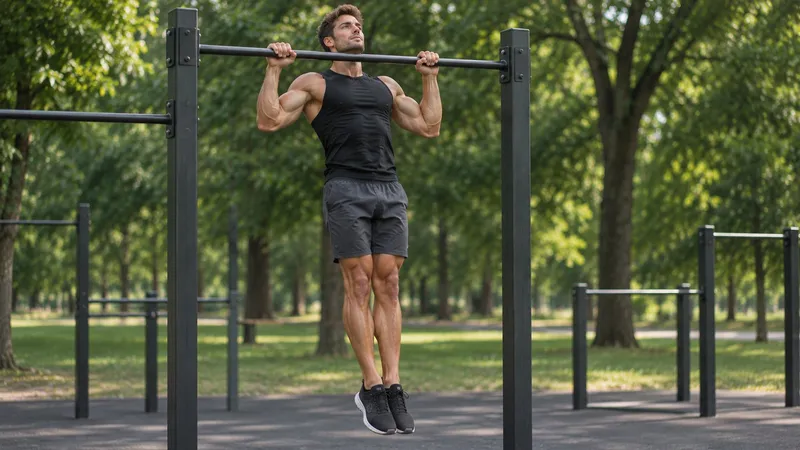
A low bar or a sturdy railing turns any playground into an outdoor gym. Use it only when children are not playing and follow the posted rules.
- Inverted rows: hang under a hip-high bar with straight legs and pull your chest to the bar. A great step toward pull-ups.
- Pull-ups or chin-ups: on a high bar. Start with slow negatives if you cannot do a full rep yet.
- Hanging knee raises: hang from the bar and lift your knees toward your chest.
- Box jumps or step-ups: on a low, stable platform.
Hill and Sprint Intervals
Find a gentle hill 30-50 meters long. Run or walk fast up it for 20-30 seconds, then walk back down to recover. Start with 4-6 repeats and build up to 8-10. Hills give you a hard cardio workout with less pounding than sprints on flat ground.
Best Outdoor Activities for Fitness (and Fun)
If structured workouts are not your thing, choose an activity you enjoy. Use the calculator below to see roughly how many calories each one burns for your weight. Values come from the 2024 Adult Compendium of Physical Activities [5].
For example, a 160 lb (73 kg) person burns about 220 calories in 30 minutes of hiking and about 290 in 30 minutes of cycling at 12-14 mph.
Hiking for Fitness
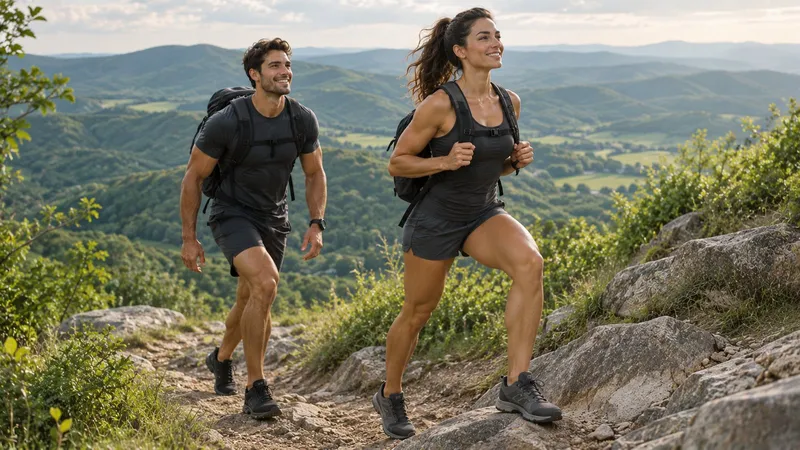
Hiking builds leg strength and endurance and lets you explore. Hiking with a daypack is more demanding than hiking without one [5]. Start with flat trails of 2-3 miles and add distance or elevation gradually. To get fit for a longer hike, walk with your daypack on weekends, add stairs or hills once a week and do step-ups and lunges from the park workout above.
Cycling
Cycling is easy on the joints and great for building endurance. Leisure cycling at 10-12 mph is about as intense as hiking, and 12-14 mph comes close to running at 6 mph [5]. Always wear a helmet and use lights and reflective clothing at dusk.
Running
Running is the most time-efficient outdoor cardio. If you are new to it, alternate 1 minute of jogging with 2 minutes of walking and build from there. See our guide to running vs walking for weight loss for an 8-week plan.
Swimming and Paddle Sports
Swimming works the whole body with minimal joint stress. Kayaking and stand-up paddleboarding train your upper body, core and balance. Only swim or paddle in areas you know are safe, ideally where a lifeguard is on duty, and wear a life jacket on the water.
Team and Racket Sports
Casual soccer and tennis give you interval-style cardio while you have fun with friends. Look for local leagues, pickup games or public courts.
Outdoor Yoga
Yoga burns fewer calories than the other activities on this list [5], but practicing on grass or at the beach is a great way to work on flexibility and relax. Try our 20-minute yoga routine in a park.
Fun Outdoor Activities for Adults
- Join a group hike, a park run or a walking club.
- Try rock climbing with a guide or at an outdoor bouldering spot.
- Rent a kayak or paddleboard for an afternoon.
- Play frisbee, pickleball or beach volleyball with friends.
- Explore your city by bike on a weekend morning.
- Take your dog for longer, faster walks.
Weekly Outdoor Workout Plan
This plan covers the recommended 150 minutes of moderate activity a week plus muscle-strengthening work on 2 days [1].
| Day | Workout | Time |
|---|---|---|
| Monday | 20-minute park workout | 25 minutes |
| Tuesday | Brisk walk or easy bike ride | 30 minutes |
| Wednesday | Stair workout or hill intervals | 20-25 minutes |
| Thursday | Rest or outdoor yoga | 20 minutes |
| Friday | 20-minute park workout | 25 minutes |
| Saturday | Hike, bike ride, swim or sport | 60-90 minutes |
| Sunday | Rest or easy walk | Optional |
Exercising Outside in Hot and Cold Weather
In the Heat
Train early in the morning or in the evening, drink water before you feel thirsty, wear light, loose clothing and use sunscreen. Slow down on hot, humid days. Know the warning signs [6]:
- Heat exhaustion: heavy sweating, weakness or tiredness, cool, pale, clammy skin, a fast, weak pulse, muscle cramps, dizziness, nausea or vomiting, headache or fainting. Move to a cooler place, loosen clothing, apply cool, wet cloths and sip water. Get medical help if you vomit or symptoms get worse or last longer than 1 hour.
- Heat stroke: throbbing headache, confusion, slurred speech, nausea, dizziness, body temperature above 103°F, hot, red, dry or damp skin, a rapid, strong pulse, fainting or loss of consciousness. This is a medical emergency: call 911 right away.
In the Cold
Dress in layers you can remove as you warm up, cover your head and hands and choose shoes with good grip. Warm up a little longer than usual, watch for ice on stairs and benches and change out of wet clothes soon after your workout.
Outdoor Safety Checklist
- Check the weather forecast before you go.
- Tell someone your route and when you expect to be back, especially for hikes.
- Carry water, a charged phone and sun protection.
- Wear reflective clothing or a light when it is dark.
- Check that benches, bars and railings are stable before you use them.
- Stay on marked trails and learn to read a trail map.
Heat and dehydration catch people out more often than they expect. Drink before you feel thirsty, protect your skin, and turn back early if you feel dizzy, sick or unusually tired.
Rose TateHealth Educator & Nutrition CoachConclusion
You do not need a gym to get fit. A park bench, a staircase or a playground bar is enough for a full-body outdoor workout, and activities like hiking, cycling and swimming make it easy to reach 150 minutes of activity a week. Start with the 20-minute park workout twice a week, add one outdoor activity you enjoy and respect the weather. The fresh air and green views are a real bonus for your mood.
FAQs
What is an outdoor workout?
Any exercise you do outside: a park circuit with bodyweight moves, a stair or hill session, a run, a bike ride, a hike or a game of soccer. Most outdoor workouts need little or no equipment.
Is it better to work out inside or outside?
Both work for fitness. Outdoor exercise is linked to a better mood and fewer symptoms of depression and anxiety than the same exercise indoors [2][3], while the gym makes it easier to lift heavy weights and train in any weather. Many people combine both.
Do 20-minute workouts really work?
Yes. Every bit of activity counts. Three or four 20-minute workouts plus some walking can add up to the recommended 150 minutes a week [1].
How do I get fit for a hike?
Walk regularly with the daypack you plan to use, add stairs or hills once a week and do leg exercises such as step-ups and lunges 2 times a week. Increase your hiking distance gradually.
Can you build muscle with outdoor workouts?
Yes, especially as a beginner. Push-ups, rows, pull-ups, step-ups and lunges build strength if you keep making them harder: more reps, slower tempo or harder variations. For bigger gains you will eventually need extra weight.
How many calories does hiking burn?
About 220 calories in 30 minutes, or about 435 an hour, for a 160 lb person hiking cross country [5]. A heavier pack, hills and a faster pace burn more.
What should I bring to an outdoor workout?
Water, comfortable shoes with good grip, sun protection, a phone and a small towel. For hikes, add a daypack, snacks, a map and an extra layer.
Sources
- U.S. Office of Disease Prevention and Health Promotion: Top 10 Things to Know About the Physical Activity Guidelines for Americans
- Liu X et al. Effects of green exercise on mental health: a systematic review and meta-analysis. Front Psychol. 2026
- Liang Y, Wei DY, Min S. Comparative efficacy of green exercise versus indoor exercise for depression and anxiety: a systematic review and network meta-analysis. Front Public Health. 2026
- White MP et al. Spending at least 120 minutes a week in nature is associated with good health and wellbeing. Sci Rep. 2019
- 2024 Adult Compendium of Physical Activities
- National Weather Service. Heat Cramps, Exhaustion, Stroke
This article is for general information only and is not a substitute for professional medical advice. Talk to your doctor before starting a new exercise program. See our medical disclaimer.