Weight Training for Women: Benefits, 8 Myths and a Beginner Routine
 Written by Patrick UtschinskiNASM Certified Personal Trainer
 Reviewed by Rose TateHealth Educator & Nutrition Coach
Summary
- Weight training will not make you bulky: women gain muscle slowly and get a firmer, more defined shape.
- It slows age-related muscle loss, supports bone density and reduces symptoms of depression.
- Start with 2-3 full-body sessions a week built on six basic movements, then add weight step by step.
- After 40 and 50 it matters even more: women in their 60s improved bone density with progressive training.
On this page
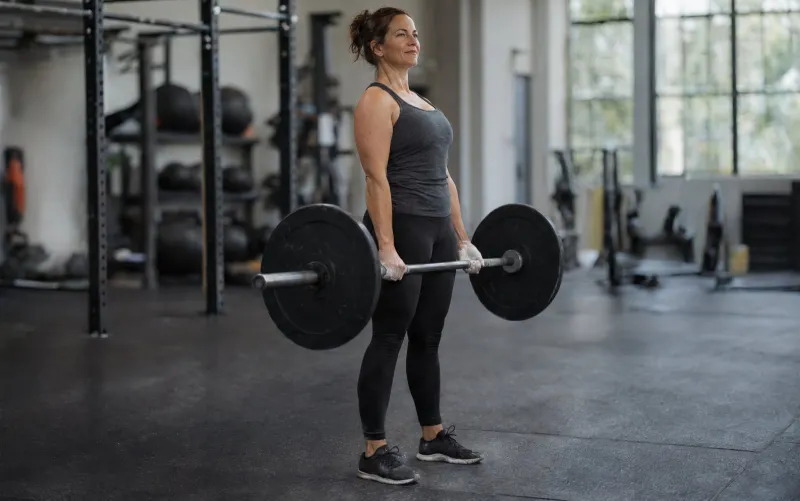
Weight training is one of the best things a woman can do for her body: it builds strength, protects bones, supports mood and makes everyday life easier at any age. And no, it will not make you bulky. Below you will find the real benefits backed by research, 8 common myths and the facts behind them, a simple beginner routine and how to adapt strength training for women over 40 and 50.
Benefits of Weight Training for Women
- Stronger muscles at any age. Inactive adults lose about 3-8% of their muscle mass per decade, and resistance training helps rebuild it[2].
- A healthier body composition. In studies, 10 weeks of resistance training added about 1.4 kg of lean weight, removed about 1.8 kg of fat and raised resting metabolic rate by 7%[2].
- Stronger bones. Resistance training can increase bone mineral density by 1-3%[2], which matters most after menopause.
- Better mood. A meta-analysis of 33 trials found that resistance training significantly reduced symptoms of depression, regardless of how much strength people gained[6].
- A longer, healthier life. Muscle-strengthening activities are linked with a 10-17% lower risk of early death, heart disease, cancer and diabetes, with the biggest benefit at about 30-60 minutes a week[7].
8 Weight Training Myths Women Still Believe
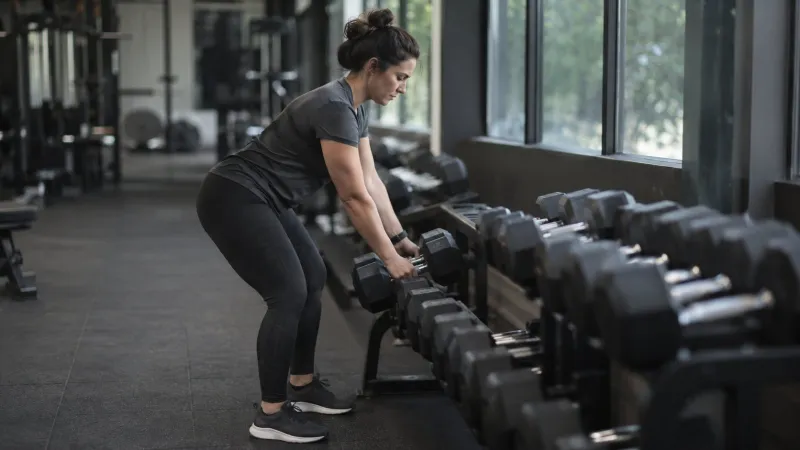
Myth 1: Lifting Weights Will Make Me Bulky
Fact: Women respond to the same training program with about the same relative muscle growth as men[3], but they start from a smaller muscle mass and have far less testosterone, so the absolute gains are small and slow. Getting truly "bulky" takes years of hard, focused training and eating in a calorie surplus. What most women notice in the first months is a firmer, more defined shape and clothes that fit better.
Myth 2: Light Weights Tone, Heavy Weights Bulk
Fact: "Toning" simply means building some muscle and losing some fat. Light and heavy weights build muscle about equally well when sets are taken close to fatigue, while heavier weights build more maximal strength[4]. So the best approach is a mix: moderate weights for 8-12 reps most of the time, and a few heavier sets once your technique is solid.
Myth 3: Cardio Is Better Than Weights for Weight Loss
Fact: Cardio burns more calories during the session, but weight training helps you keep muscle while you lose fat and slightly raises your resting metabolism[2]. The best results come from combining both with a moderate calorie deficit, as in our 4-week workout plan for women to lose weight.
Myth 4: Lifting Is Dangerous for Women
Fact: With good technique and gradual progression, weight training is safe for most women. In the LIFTMOR trial, postmenopausal women with low bone mass did supervised heavy lifting twice a week for 8 months, and only one minor adverse event, a back spasm, was reported[5]. The risk comes from poor form and doing too much too soon, not from the weights themselves.
Myth 5: Women Need a Different Program From Men
Fact: Muscles do not know whose body they are in. When men and women follow the same program, they gain muscle at a similar rate, and untrained women may even gain upper-body strength faster[3]. Choose exercises by your goals and experience, not by gender.
Myth 6: You Need a Gym
Fact: A pair of adjustable dumbbells, a resistance band and your own body weight are enough for the first months. Squats, lunges, push-ups, rows and glute bridges train every major muscle group. See our home workouts without a gym for ideas.
Myth 7: It Is Too Late to Start After 40 or 50
Fact: The women in the LIFTMOR trial were 65 years old on average and still improved their bone density, strength and physical function[5]. Muscles respond to training at any age. Starting later simply means you begin with lighter loads and progress more gradually.
Myth 8: Muscle Turns Into Fat When You Stop
Fact: Muscle and fat are different tissues, and one cannot turn into the other. If you stop training, muscles slowly shrink, and if you keep eating the same amount while moving less, you may gain fat. The fix is simple: keep at least 1-2 short strength sessions a week.
The women I train get stronger fastest once they stop fearing heavier weights. Start light to learn the movement, then add weight step by step while your form stays clean.
Patrick UtschinskiNASM Certified Personal TrainerBeginner Weight Training Routine for Women
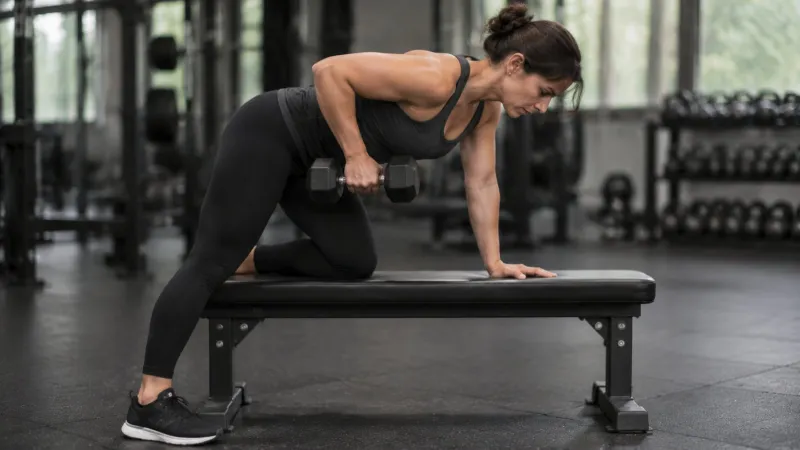
Train your whole body 2-3 times a week on non-consecutive days, for example Monday, Wednesday and Friday. Each session covers six basic movement patterns. Start with 2 sets per exercise and build up to 3, with 8-12 reps and 60-90 seconds of rest.
| Movement | Start here (home or dumbbells) | Next step (gym) | Main muscles |
|---|---|---|---|
| Squat | Goblet squat with one dumbbell | Barbell back squat or leg press | Thighs, glutes |
| Hip hinge | Dumbbell Romanian deadlift | Barbell or trap bar deadlift | Hamstrings, glutes, back |
| Push | Push-up (incline if needed) | Dumbbell or barbell bench press | Chest, shoulders, triceps |
| Pull | One-arm dumbbell row on a bench | Lat pulldown or assisted pull-up | Back, biceps |
| Single leg | Reverse lunge or step-up | Bulgarian split squat | Thighs, glutes, balance |
| Core and carry | Plank, dead bug | Farmer's carry with heavy dumbbells | Core, grip, posture |
How Heavy Should You Lift?
Choose a weight you could lift for about 2 more reps at the end of each set, with good form. If you could easily do 5 more, it is too light. If your form breaks down before the last rep, it is too heavy. Spend the first 2-3 weeks learning the movements with light weights, then start adding load.
How to Progress
Use simple double progression: when you can do 12 good reps in every set, increase the weight slightly (for example, by 1-2 kg per dumbbell) and work back up from 8 reps. Write every workout down. Seeing the numbers go up is the best motivation there is.
Strength Training for Women Over 40 and 50
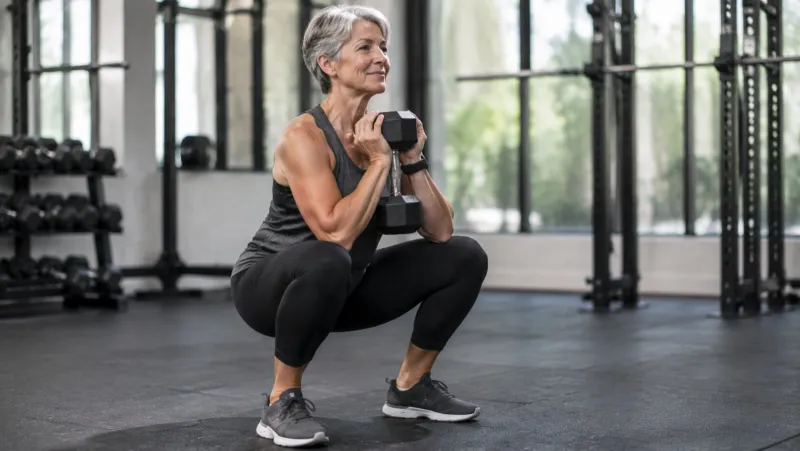
Muscle mass declines with age if you do not train it, and after menopause bone density drops faster because of lower estrogen levels. That makes strength training more important, not less. The basics stay the same, with a few adjustments:
- Train 2-3 times a week and give each muscle group at least one rest day between sessions.
- Warm up longer: 8-10 minutes of walking, mobility work and light sets.
- Focus on legs, hips and back: squats, hip hinges, rows and step-ups protect the hips and spine and make daily life easier.
- Add balance work: single-leg exercises or standing on one leg while brushing your teeth.
- Progress steadily toward heavier weights. In the LIFTMOR trial, women with osteopenia and osteoporosis who built up to heavy sets of 5 under supervision improved spine bone density by 2.9%, while the low-intensity group lost 1.2%[5].
If you have osteoporosis, a previous fracture or joint problems, ask your doctor or a physiotherapist to help you plan which exercises and loads are right for you before you start lifting heavy. Pair your training with gentle mobility work, like our yoga for flexibility and strength, on rest days.
How Often Should Women Lift Weights?
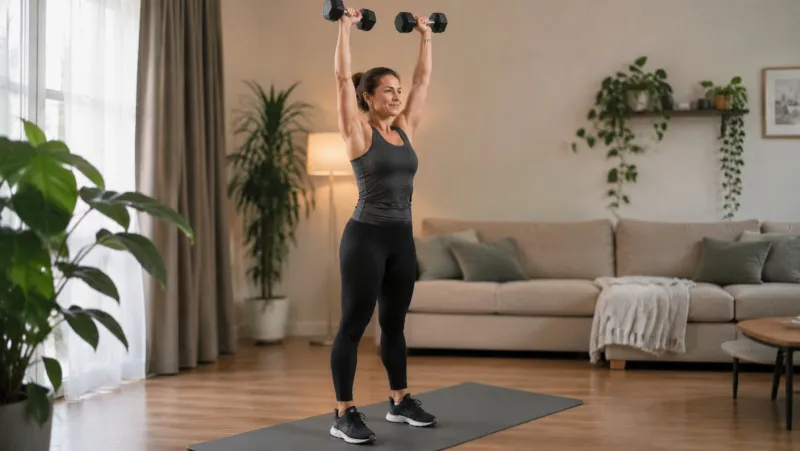
The official guidelines recommend muscle-strengthening activities that work all major muscle groups on at least 2 days a week[1]. For most women, 2-3 full-body sessions of 30-45 minutes is the sweet spot: research links about 30-60 minutes of strength training a week with the largest reduction in health risks[7]. Add cardio on other days, such as brisk walking (see walking vs running), and keep at least one full rest day.
Common Mistakes When Starting Weight Training
- Staying with the same light weights for months. Muscles only change when the challenge grows.
- Doing only isolation exercises. Squats, hinges, presses and rows give you more results in less time than endless arm and leg machines.
- Skipping the warm-up. A few minutes of light sets prepare joints and muscles.
- Training the same muscles every day. Muscles grow during rest, not during the workout.
- Eating too little protein. Include a protein source at every meal to support recovery. Read more in how to gain muscle as a woman.
Weight training is safe for most women at any age when it is introduced gradually. During pregnancy and after giving birth it can still help a lot, but the program should be adjusted with your doctor or midwife.
Rose TateHealth Educator & Nutrition CoachConclusion
Weight training for women is not about getting big. It is about getting stronger, keeping your bones and muscles healthy and feeling capable in everyday life. Start with 2-3 full-body sessions a week, learn the six basic movements with light weights, then add load step by step. Whether you are 25 or 65, it is never too late to start, and the benefits grow with every month you keep going.
FAQs
Will lifting weights make me bulky?
No. Women build muscle slowly and in small amounts, so regular strength training makes you look firmer and more defined, not bulky. Getting big takes years of specialized training and eating in a calorie surplus.
How often should a woman lift weights?
At least 2 days a week, and 2-3 full-body sessions is ideal for most women. Leave a rest day between sessions that train the same muscles.
Should women lift heavy or light weights?
Both work for building muscle when you take your sets close to fatigue, but heavier weights build more strength. Start light to learn the technique, then gradually move to weights you can lift for 8-12 reps.
Can I start strength training after 50?
Yes. Women in their 60s improve strength, physical function and bone density with regular training. Start with lighter weights, progress gradually and check with your doctor if you have osteoporosis or joint problems.
How long does it take to see results from weight training?
Most beginners feel stronger within the first few weeks as their coordination improves. Visible changes in muscle tone usually take 2-3 months of consistent training combined with good nutrition.
What is the difference between weight training and strength training?
Strength training is any exercise that makes your muscles work against resistance: body weight, bands, machines or free weights. Weight training is strength training with weights such as dumbbells, kettlebells or barbells.
Sources
- U.S. Office of Disease Prevention and Health Promotion: Top 10 Things to Know About the Physical Activity Guidelines for Americans
- Westcott WL. Resistance training is medicine: effects of strength training on health. Curr Sports Med Rep. 2012
- Roberts BM, Nuckols G, Krieger JW. Sex differences in resistance training: a systematic review and meta-analysis. J Strength Cond Res. 2020
- Schoenfeld BJ et al. Strength and hypertrophy adaptations between low- vs. high-load resistance training: a systematic review and meta-analysis. J Strength Cond Res. 2017
- Watson SL et al. High-intensity resistance and impact training improves bone mineral density and physical function in postmenopausal women with osteopenia and osteoporosis: the LIFTMOR randomized controlled trial. J Bone Miner Res. 2018
- Gordon BR et al. Association of efficacy of resistance exercise training with depressive symptoms: meta-analysis and meta-regression analysis of randomized clinical trials. JAMA Psychiatry. 2018
- Momma H et al. Muscle-strengthening activities are associated with lower risk and mortality in major non-communicable diseases: a systematic review and meta-analysis of cohort studies. Br J Sports Med. 2022
This article is for general information only and is not a substitute for professional medical advice. Talk to your doctor before starting a new exercise program. See our medical disclaimer.